METHOD GUIDE · UPDATED 2026-07-28
Smart Lock and Doorbell Low-Light Energy Assessment
Feasibility for locks, doorbells, and contact sensors cannot be inferred from a single peak-power figure. Standby, wake-up, actuation, wireless events, and storage belong in one daily energy budget.
On-site decision table
| Decision factor | Measure on site | Do not conclude from this page |
|---|---|---|
| Installed light | Log illuminance and useful lighting hours at the actual entryway, corridor, or door location with lights on, lights off, and normal shading. | A single illuminance reading does not represent all-day or year-round energy availability. |
| Device load | Measure standby current and the energy and daily frequency of sensing, display, radio, and lock-actuation events. | Low standby power does not show that actuation and communication peaks are covered. |
| Collector position | Confirm usable area, orientation, door movement, hand shading, trim, and wiring constraints. | Physical fit does not establish stable incident light at the installed position. |
| Storage margin | Check capacity, conversion loss, peak discharge, and reserve against the least favorable continuous low-light period. | Similar average daily input and load do not establish reliable runtime. |
Public sources and boundaries
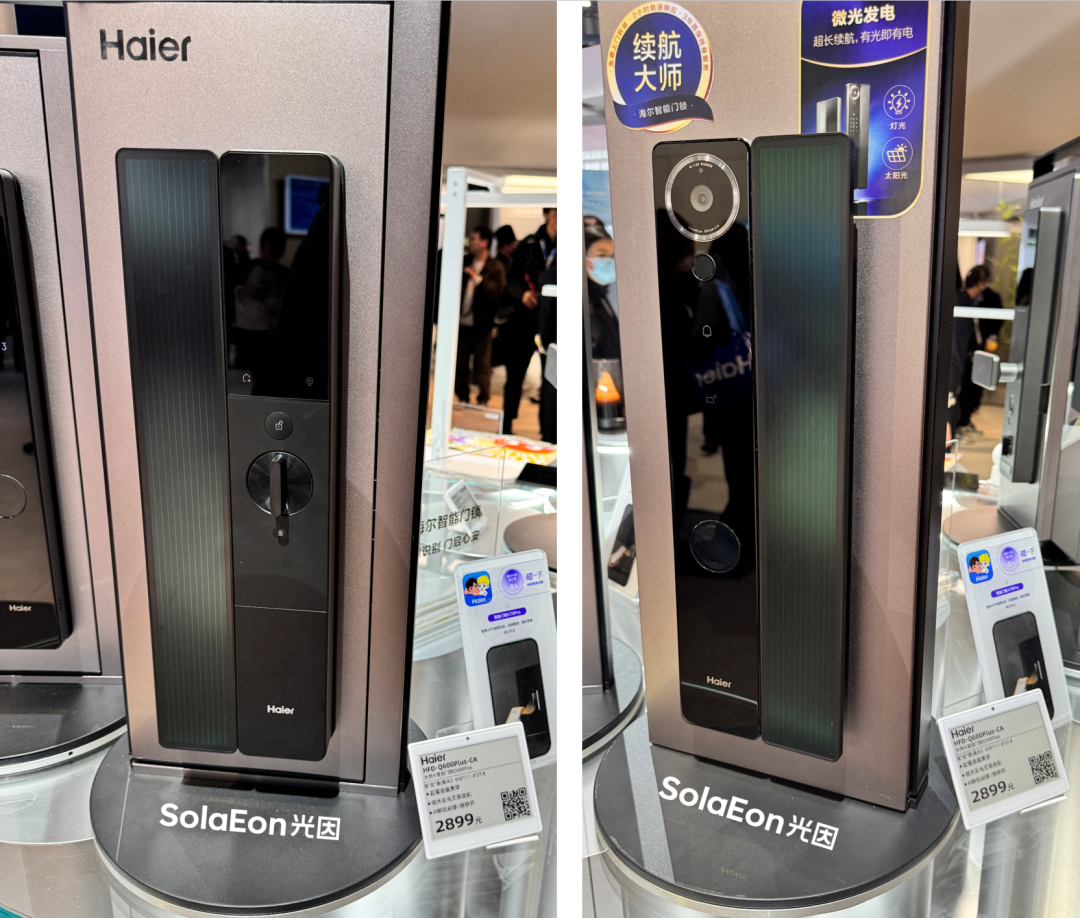
Public information: The SolaEon news archive records collaboration information in which SolaEon supplied perovskite solar components for the Haier Tianyue AI smart lock. That record supports only the published collaboration fact.
Do not infer: It does not establish deployment for other lock models, positions, or environments, and it does not establish unpublished performance, supply, or runtime conclusions. The table and calculator outputs are engineering assessments.
Continue the assessment
Frequently asked questions
Are smart locks suitable for energy harvesting?
Measure installed light, standby, actuation, and communication events before checking collector area and storage margin.
Can it directly replace a battery?
Do not assume so. Validate the energy balance and reserve under the least favorable light and usage conditions.