REAL-WORLD SCENARIOS / UPDATED 2026-07-22
Outdoor Public Facilities Energy Assessment
Mobile public toilets, community service stations and public restroom micro-spaces are real-world scenarios. This page evaluates roof conditions, storage and low-power loads; it does not turn site photographs into an automatic product-deployment or performance claim.
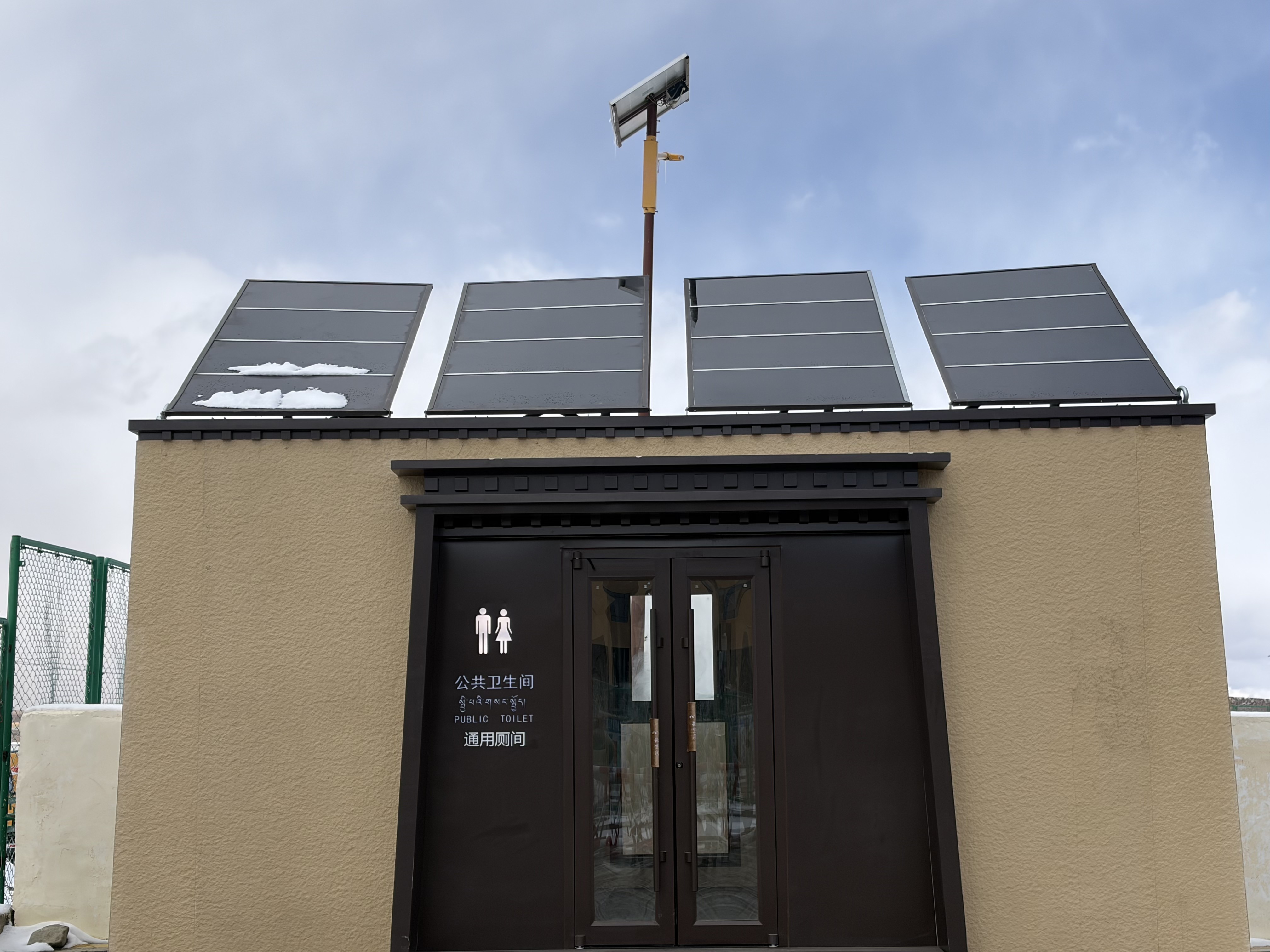
Separate facts from assessment
| Layer | Meaning on this page |
|---|---|
| Real-world scenario | The facility and supplied site image are real. |
| Engineering assessment | Rooftop conditions, shading, storage and loads are used to assess fit. |
| Product deployment | Requires public product, project or customer evidence; it is not inferred from an image. |
Three scenarios
Mobile public toilet
Separate lighting, environmental sensing, status reporting and signage loads, then measure usable roof area, shading and maintenance conditions.
Community service station
Assess the load patterns of security, notices, lighting, gateways and auxiliary equipment rather than relying on a single daily-generation number.
Public restroom micro-space
Start with signage, environmental monitoring, low-frequency communication and lighting control, then budget daylight duration, storage and power management.
Assessment sequence
- Record visible roof area, direction, shading and daily light availability.
- Split lighting, sensing, communications, displays and gateway loads.
- Separate continuous demand from short peaks to establish storage needs.
- Validate final configuration with field measurements and prototypes.
Frequently asked questions
Do these images prove a product deployment?
The images document real facilities. This page evaluates collection and load conditions and does not treat the images as proof of a particular product deployment or performance commitment.
Which public-facility loads should be assessed first?
Start by separating lighting, environmental sensing, status reporting, signage and gateway loads, then evaluate rooftop conditions and storage strategy.